Our books are bound by hand. This is how we do it:
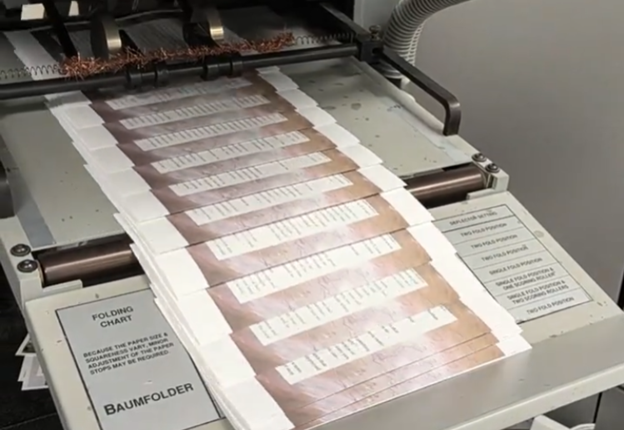
We have the benefit of using a folding machine; however, there are methods of folding a page at a time using a bone tool and a level surface.
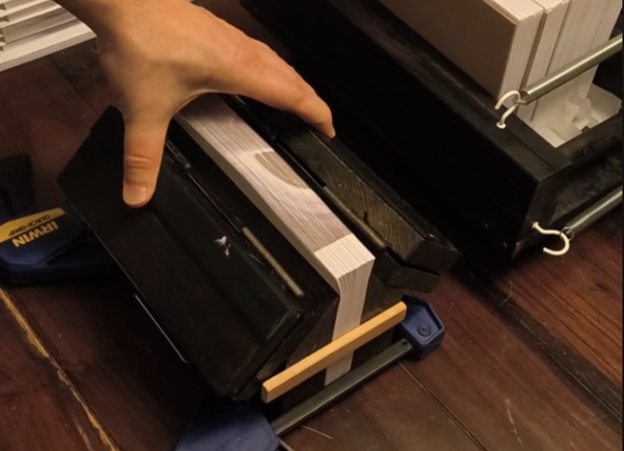
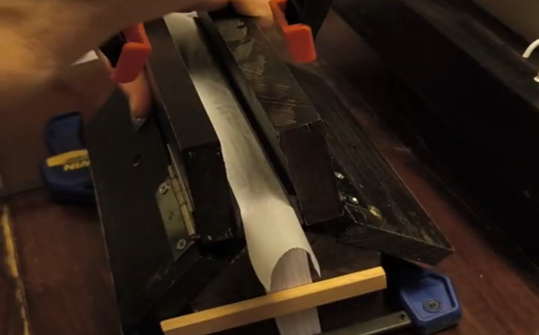
This is a device of our own invention. It’s meant to hold the folded pages spine-up and is held together by two vice grips at the base. The top inch of the book is not gripped, as this allows the pages to be fanned, which gives us more room for the glue to sink a little ways deeper than just the surface.
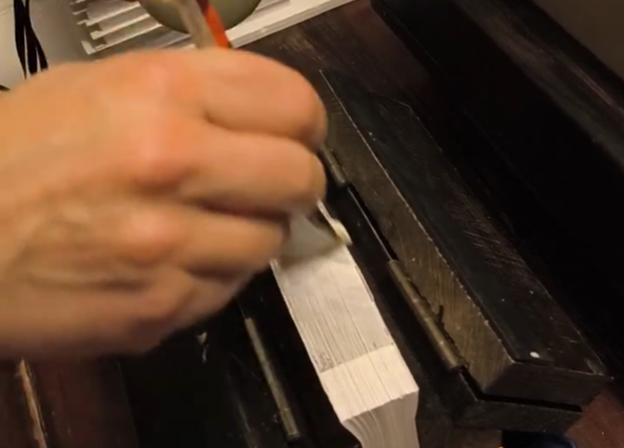
Here we are gluing the spine with PVA, which is NeutralPh Polyvinyl Acetate. This is great for bookbinding, as it holds well over time. The first pass is just one coat, but you can go over a few times.
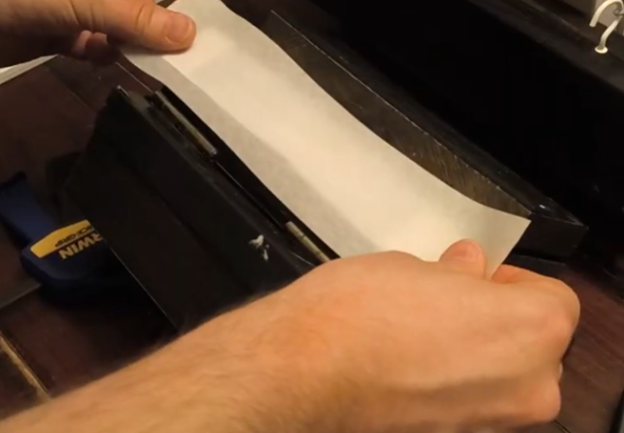
After the first coat is applied, we use a single sheet of parchment paper to hold the pages in place. This way, the clamps on the top won’t stick to the wooden clamps.
The clamps are then brought up and tightened by two vice grips. This is held together for 20-30 minutes.
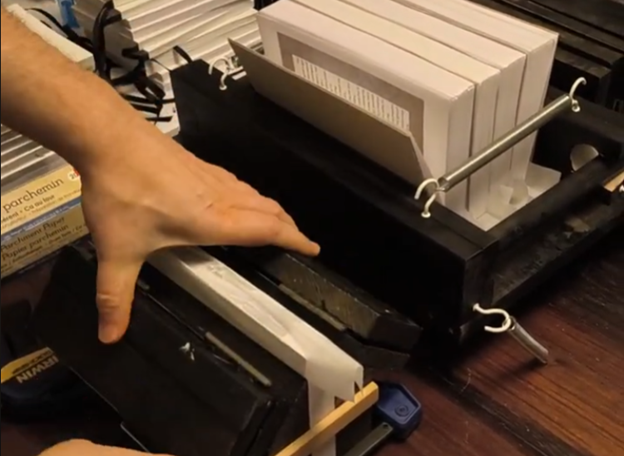
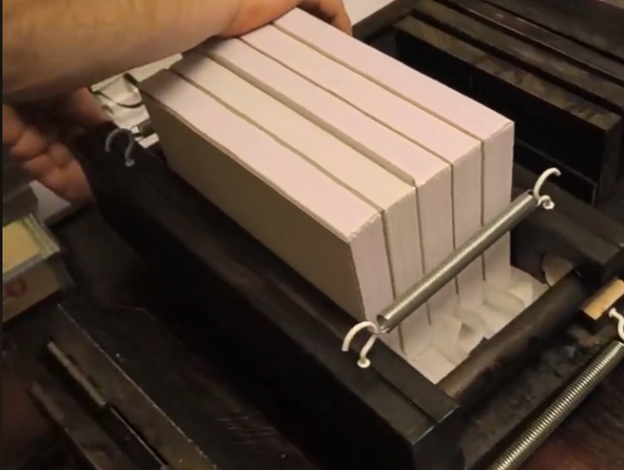
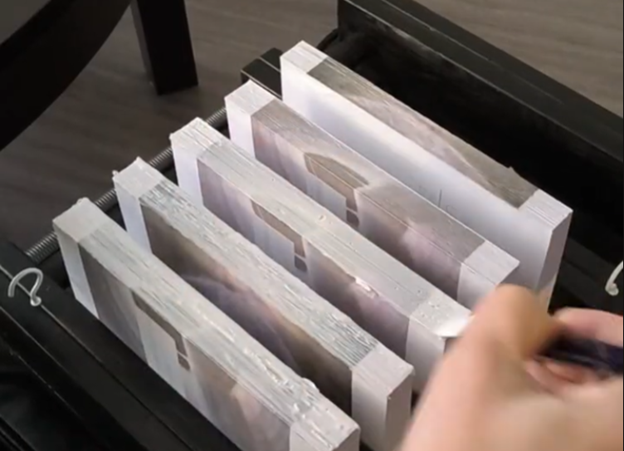
After the glue has mostly dried, we remove the top clamps and take the book out. We then place it in another one of our inventions, which is a multiple book clamping machine that is held together by springs. The books go spine facing-down.
The springs hold the books tight, and can hold up to eight books. Each book is held there for an hour, which is enough time for the PVA to harden.
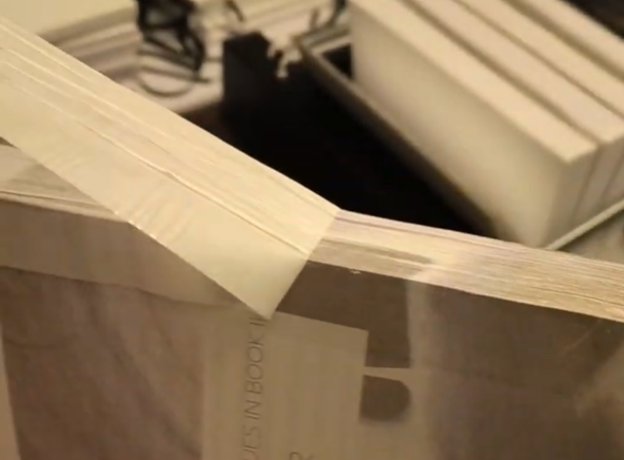
We then remove the book and peel off the parchment paper strip. The glue may seem a little wet still, but it is holding.
When there are enough books to give a second and third coat, we put them into the holding device, only this time, spine face-up. After the third coat, we then attach a small ribbon that will act as a bookmark.
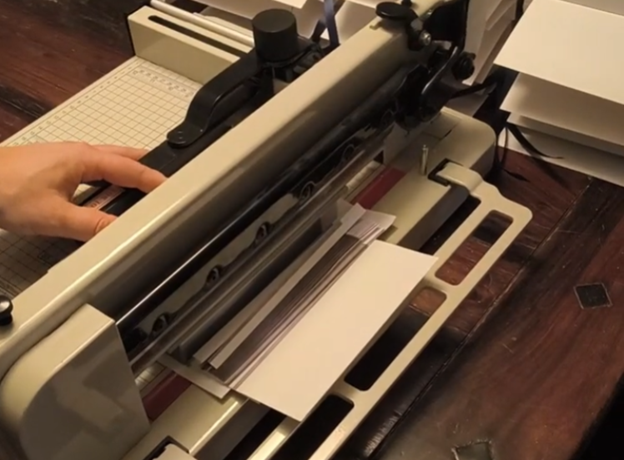
When the glue has hardened after a third coat, it’s time to cut the book to measurements. We use what’s known as a guillotine cutter, which can cut up to 500 sheets of paper. It’s important to put a few thick sheets of paper on the top and bottom of the cut, so the blade doesn’t miss one of the pages you want to cut. It’s common that the last page or two is not fully cut, due to the rubber base.
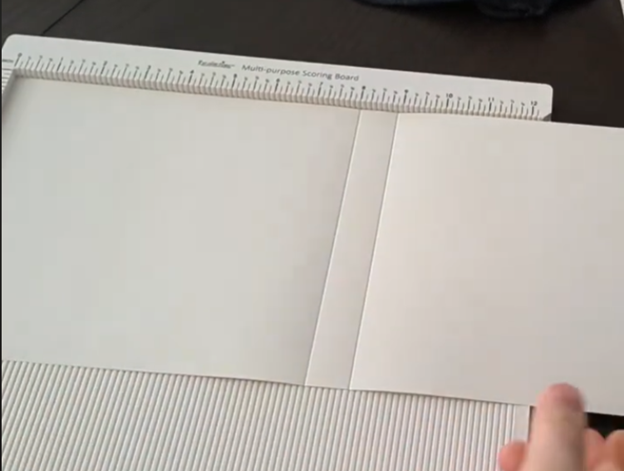
All of our paperbound books have a outer cover that makes it seem like a “soft hardcover” book. We measure out the spine and then use a scoring knife for it to fold over. We glue the spine itself and wait for the glue to slightly dry before applying it to the spine of the book.
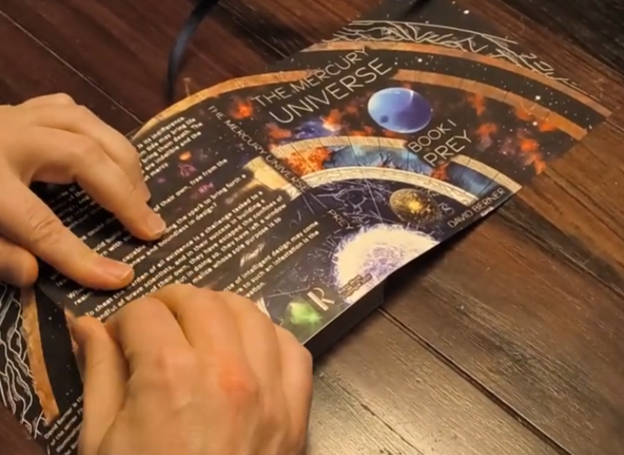
Once we have attached the cover to the main book, we can then wrap the soft cover, much like a hardcover book. We wrap the cover around both sides of the book and then trim any excess paper that could be off measurement (typically one or two millimeters at the most).
After that, the book is made!